The SUB 300 is the watch that put DOXA on the diver's map. It arrived at Basel in 1967 with an orange dial, a rotating bezel the company patented, and a case built for diving. Over the decades it has been made in steel, in a left-handed Aristera version and in several movements. Owners and buyers should know which version they have, since the case, the bezel and the movement all change with it, and the paperwork is the only reliable way to tell.
Urs Eschle, the diving move and the 1967 debut
DOXA moved into diving in the early 1960s. The brand's history credits Urs Eschle with leading the work, and it describes testing in Lake Neuchâtel in 1964 to see which dial colors stayed legible underwater. According to Eschle's account as the brand tells it, orange was the most readable color to about 30 metres, and that finding produced the dial the SUB 300 made famous.
The SUB 300 launched at Basel in 1967 with the orange dial and a patented rotating bezel. DOXA's diving story also runs through the French diver Claude Wesly, and the brand's dive watches were distributed in the United States in 1968 under an arrangement tied to Cousteau's diving circle. Some dials of the period carry the Aqua-Lung logo, a detail collectors look for when they check originality.
The steel SUB 300 Sharkhunter is rated to 300 metres, with a domed sapphire crystal and a Swiss automatic chronometer movement. The SUB 300T Aristera is the left-handed version with a 1,200 metre rating, which makes it a different watch for buyers who want the crown on the other side. Check the reference, because the two sit side by side in the brand's catalogue.
Dial colors and bezel markings have changed across the decades, so a SUB 300 from one generation can look quite different from another. Collectors often write down the references they want and check photographs against that list.
Movements across the SUB 300 family
The movement changes with the generation and the reference, so don't assume one caliber covers the whole family. Trade reports link recent SUB 300T watches to a Sellita SW200-1, while earlier examples used an ETA 2824-2. A specialist should identify the movement from the reference, the rotor and the caseback before quoting a service.
Servicing a SUB 300 is largely a job for an experienced independent, since the Swiss automatics involved are common in the trade. The parts that need the most care are the bezel mechanism, the gaskets and the crown. A rotating bezel should move with a firm, even click, and any slack suggests a worn spring or a tired detent.
Water resistance needs the same attention. Whatever interval a seller or manual suggests, a watch used in water should be pressure tested after every service, and the result should go on the invoice. A dive watch tested only at the point of sale tells you very little about its condition the following year.
Ask whether the watch has been in salt water since its last test. A diver that has spent time in the sea deserves a fresh check, even when its paperwork looks good.
Buying a pre-owned SUB 300
Start with the version. The steel Sharkhunter, the Aristera and older references differ in the crown side, the case and the bezel, as well as in the movement. Check the reference on the caseback and paperwork, then compare the dial and bezel against that reference. The orange dial and the bezel details are where counterfeits most often fall short, so compare them closely in good light.
Check the bezel click and the insert for fading or cracks, and make sure the crown screws down cleanly. Ask for a recent pressure test or gasket replacement, because a watch that was opened and not tested may have seal problems that only appear in the water.
Ask about the dial and hands too. A replacement dial is common on older divers, and it changes the value and the originality. A seller who discloses a replacement earns more trust than one who doesn't, and a full service history is the best reassurance you can get.
Spend a minute with the bezel before making an offer. A bezel worn unevenly, or an insert that does not match the rest of the watch, can tell you more about its history than the asking price.
Care, originality and the diver's kit
Rinse the watch in fresh water after use in salt water, and keep the crown fully closed whenever the watch is wet. Store it away from heat and direct sunlight when it is not on the wrist, since long exposure to heat is hard on seals and straps.
Originality for collectors depends on the dial, hands, bezel insert and movement. Keep the box, papers and service invoices together. That paperwork shows what was original when the watch left the factory and what has changed since, and it helps the next owner value the watch fairly.
Replace the strap or bracelet with parts that match the reference. A mismatched strap is a small issue, but a bracelet fitted to the wrong case can cause fit problems that look like wear. If you change the bracelet, ask the watchmaker to check the end links and the fit before you wear it in the water.
A dive watch lives a hard life, so ask for a quick look at the caseback, lugs and crown each time it comes back from a service. Those small checks catch problems early, while they are still cheap to fix.
What to check on a Doxa SUB 300
- Reference and crown side matched to the paperwork
- Bezel with a firm, even click and no slack
- Dial and bezel insert original or disclosed as replaced
- Recent pressure test or gasket replacement on record
Common questions
What is the difference between the SUB 300 and the SUB 300T?
The steel SUB 300 Sharkhunter is rated to 300 metres. The SUB 300T Aristera is the left-handed version with a 1,200 metre rating. Check the reference to confirm which one you have.
Is the orange dial on every SUB 300?
Not every SUB 300 has the same dial, so confirm the reference. Orange dials are also a common target for counterfeiters, so compare the dial against the reference and paperwork.
Who should service a SUB 300?
An experienced independent can handle most SUB 300 movements once they have confirmed the caliber and the bezel mechanism. The brand's service center is the route while the watch is under warranty.
Why was orange chosen for the dial?
DOXA's history credits Urs Eschle's testing in Lake Neuchâtel with showing that orange was the most legible color to about 30 metres. The brand presents this as part of its diving origin story.
Find a Doxa specialist
Doxa SUB 300 owners use Doxa specialists for servicing, authentication and restoration.
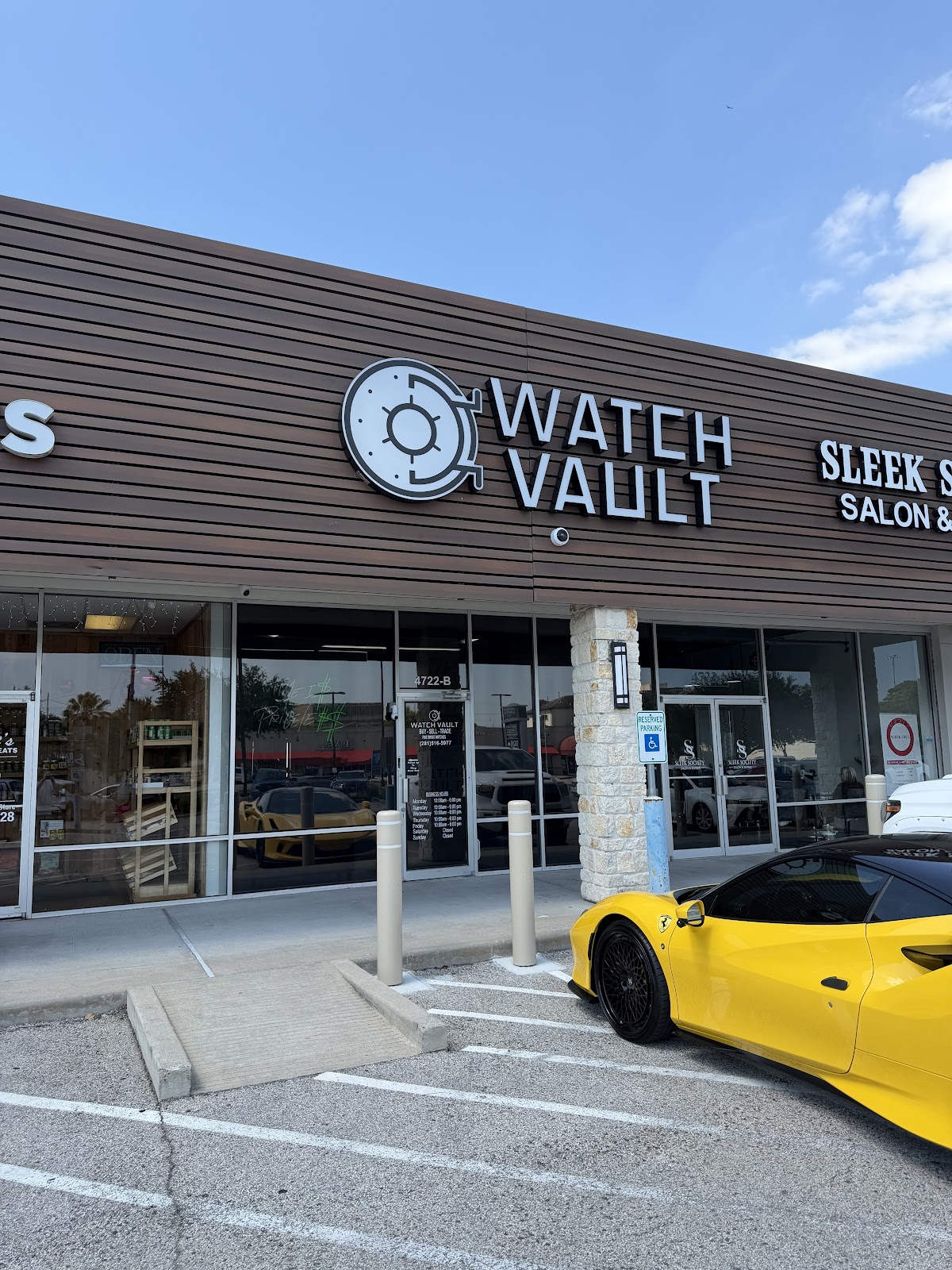
Watch Vault
Afton Oaks / River Oaks Area, Houston, TX
exotic & classic service in Houston

Village Watch Center
Brookline Village, Boston, MA
exotic & classic service in Boston
Analog:Shift
Midtown East, New York, NY
Vintage and pre-owned specialist on East 57th Street