Le Locle in 1889, and the diving turn of the 1960s
Ducommun's business began in the Jura town of Le Locle, and the brand's own history treats that town as the start of everything that followed. The diving story begins in the early 1960s with Urs Eschle, who led the company's move toward the deep sea. He worked with professional diver Claude Wesly, and the team tested dial colors in Lake Neuchâtel to see which stayed readable underwater.
According to Eschle's account, orange performed best of the colors tested, at depths down to about 30 metres in those conditions. The SUB 300 then appeared at the Basel watch fair in 1967, with an orange dial and a patented rotating bezel. Those two features became the brand's identity. The test results are a good story, but they describe one set of conditions, not a universal rule, so treat them as the reason the color was chosen rather than proof of how it performs everywhere.
The bezel is a story of its own. It carried no-decompression information based on U.S. Navy diving tables, so it did more than track elapsed time. Jacques-Yves Cousteau negotiated an exclusive distribution arrangement for his U.S. Divers company in 1968, and some dials from that partnership carry the Aqua-Lung logo. Collectors look for those details, and they're worth knowing about before you buy.
Why the orange dial matters, and what the Sharkhunter is
The orange dial began as a practical choice and became the brand's signature. The Professional colorway is the one most people picture. Orange works well in the history the brand tells, but the history doesn't make it the most visible color at every depth or in every water condition. It was the best option the team found for the conditions they tested.
The black Sharkhunter is the other familiar face of the SUB 300, and the name also appears in DOXA's 1967 advertising. The modern steel SUB 300 Sharkhunter is a separate reference from the SUB 300T family, which carries higher ratings. The SUB 300T Aristera, a left-side-crown edition, is rated to 1,200 metres. Check the exact model name before you assume a spec, because the names are close and the ratings are not.
Limited editions multiply the references. Recent releases have included a Clive Cussler Sharkhunter in a small run and a left-handed Aristera in a 300-piece edition. Limited pieces are easy to misidentify, so ask for the reference and serial number before you buy, and compare them with the brand's own records.
Movements: the Sellita and ETA question
The movement answer changes by year. Around 2024, the SUB 300T used the Sellita SW200-1, while earlier SUB 300Ts used the ETA 2824-2. A 2024 purchase date alone doesn't tell you the movement. Ask DOXA to check the reference and serial number, especially if the watch could be older dealer stock that was bought and sold after the change.
Both base movements are widely serviced by independents, which helps a lot. The bigger question on a SUB is the bezel and the case. A rotating bezel with a worn click or a loose insert needs a shop that can take it apart without damaging the seal or the action. Ask whether they'll replace the bezel insert or only adjust it, and whether the replacement will match the original.
The steel SUB 300 Sharkhunter is listed by DOXA as a Swiss automatic chronometer with 300 metres of water resistance and a domed sapphire crystal. Check those numbers against the watch you're looking at, because a rating depends on an intact, properly sealed case. A dive watch with a cracked or replaced crystal is no longer the watch its spec describes until it has been tested.
Servicing a DOXA: dealer, brand or independent?
DOXA directs owners to authorized dealers and after-sales centers. Warranty work should go that way, since it keeps the paperwork clean and the parts genuine. Check the warranty terms before you send the watch anywhere else, because some warranties depend on using the brand's service route. If the watch came from a dealer or private seller, get the warranty status in writing before you assume it's covered.
For a dive watch, a seal test after any case work isn't optional. Ask the shop to pressure test the watch after a gasket change or a crystal swap, and to put the result in writing. If you swim or dive with it, a yearly water-resistance test is a sensible habit.
Independents do well on the movement and on many bezel and crystal jobs. Vintage pieces are a different case. Tell the shop whether you want the original dial, hands and bezel preserved rather than cosmetically restored, and agree on that before any work starts. A restoration that looks perfect can remove the originality that gives a vintage SUB its value.
Buying pre-owned Doxa and choosing a specialist
DOXA's orange and black dials are popular and copied. On any U.S. Divers piece, check the dial printing and the Aqua-Lung logo, and compare the bezel markings with known examples. Buy with papers where you can, and have an independent check the case and movement before you pay. The more the seller is pushing you to skip that step, the more reason you have to insist on it.
Dials age, and a refinished dial changes both the look and the value. Ask the seller what is original and whether the watch has had a crystal or bezel insert replaced. A bezel that clicks cleanly and lines up is a good sign of care. A bezel that feels gritty or wobbles is a reason to ask for a full service estimate before you commit.
When choosing a shop, ask about bezel service, pressure testing and their approach to vintage restoration. Then pick the one who asks the most questions about your watch before they quote. The questions show whether they know the model, and that knowledge is what keeps a dive watch reliable after the work is done. Ask to see photos or examples of their finished bezel and seal work.
What to look for in a Doxa specialist
- Bezel work and pressure testing, with results in writing
- Experience with vintage SUB pieces and a preference for keeping original parts
- Familiarity with the Sellita and ETA-based movements used across references
- A clear answer on genuine parts and on dealer stock
Doxa models
Model-by-model guides to buying, servicing, and what to watch.
The SUB 300 debuted at Basel in 1967 with an orange dial and a patented rotating bezel, and it is the family most people mean when they talk about DOXA.
Introduced at Baselworld in 2019, the three-hand SUB 200 draws on the brand's earlier diving references, with a glossy black bezel that is often mistaken for ceramic.
Doxa specialists
Top-rated Doxa near you
Specialists for your brand in your area.
6 Doxa specialists in our directory
Boston, MA
All Doxa in Boston →
Village Watch Center
Brookline Village, Boston, MA
exotic & classic service in Boston
Houston, TX
All Doxa in Houston →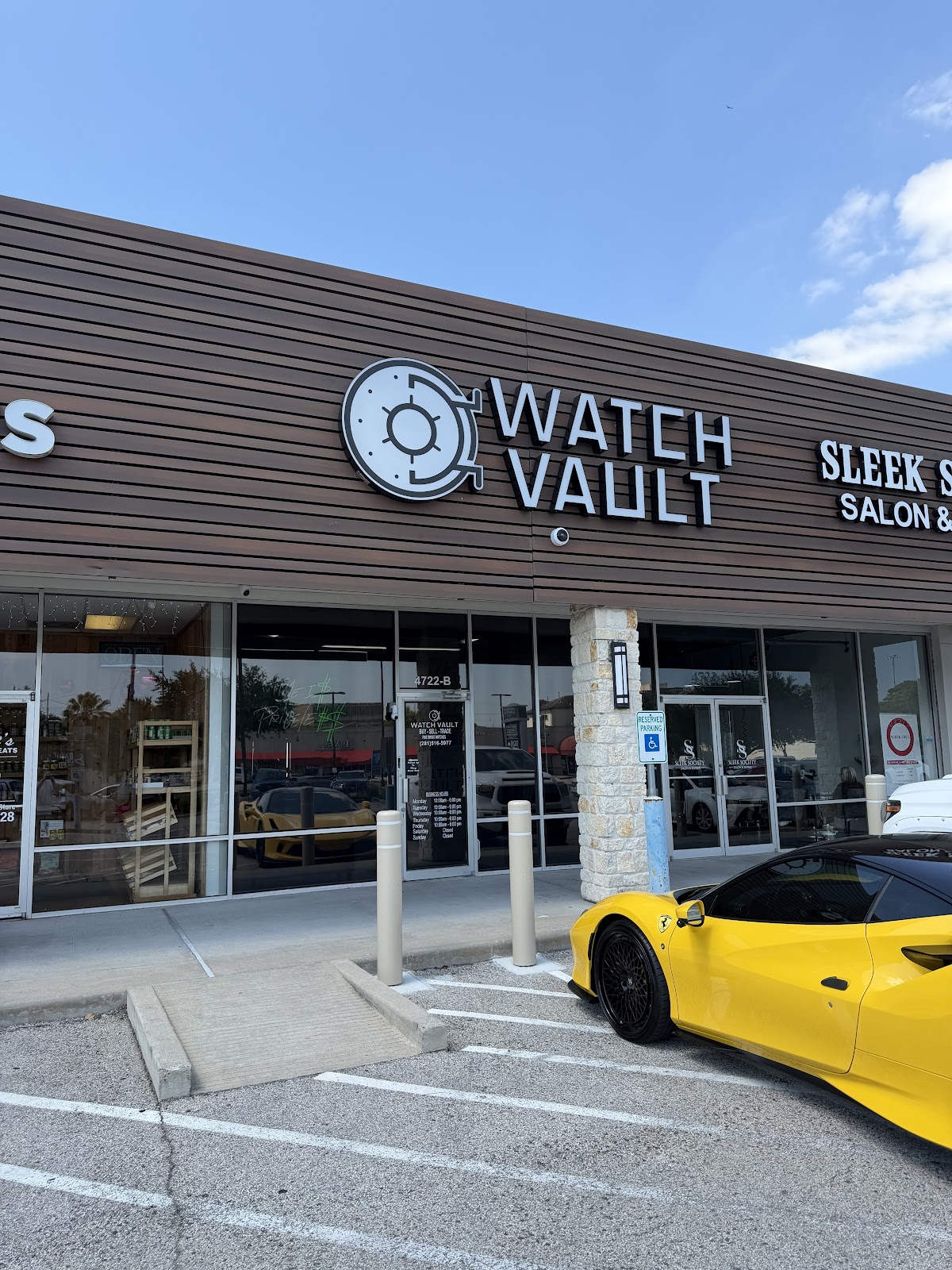
Watch Vault
Afton Oaks / River Oaks Area, Houston, TX
exotic & classic service in Houston
New York, NY
All Doxa in New York →Analog:Shift
Midtown East, New York, NY
Vintage and pre-owned specialist on East 57th Street
Beverly Hills, CA
All Doxa in Beverly Hills →Second Time Around Watch Company
Beverly Hills, CA
Vintage and pre-owned watches with in-house watchmakers
Marina Bay Watch Company
Marina del Rey, Beverly Hills, CA
Westside watch repair with free quotes
Chicago, IL
All Doxa in Chicago →Sydel & Sydel Jewelry & Watch
Loop, Chicago, IL
Certified watchmakers in the Franklin Center lobby
Doxa specialists: common questions
Who founded DOXA?
Georges Ducommun, who opened his own business in Le Locle in 1889, at the age of 21.
Why is the SUB 300 orange?
The orange dial was chosen after tests in Lake Neuchâtel in 1964, which the team's own account says performed best of the colors tried at the depths tested. It has been the brand's signature since the SUB 300 launched in 1967.
Is DOXA owned by Swatch?
No. The Jenny family has owned DOXA since 1997, and the headquarters are in Biel/Bienne. Like many brands, DOXA buys movements from outside suppliers such as Sellita and ETA.
Can an independent service a DOXA?
Often, for the movement, since the base calibers are widely serviced. For bezel and case work, ask how the shop handles seals and inserts, and whether they can pressure test the watch afterward.
What is the difference between the SUB 300 and the SUB 300T?
They are separate models with different ratings and features. The SUB 300T family carries higher ratings, and the steel SUB 300 Sharkhunter is rated to 300 metres, so check the exact reference before you assume anything.