Toric is the case that most people picture when they think of Parmigiani. Its alternating gadroons, the rounded mouldings that run around the case, and its fine knurling were established in the first wristwatch the brand released in 1996. The collection has since included perpetual calendars and chronographs, and the movement inside is different from one generation to the next. A Toric owner needs to know which generation they have, because the caliber decides the service and the value.
The case and where it started
The Toric QP Rétrograde was Parmigiani Fleurier's first wristwatch, launched in 1996, the year Michel Parmigiani founded the brand. Its gadroons and fine knurling set the house's case style, and the Toric's classical architectural influences and carefully proportioned case stayed central to the collection. The QP stands for quantième perpétuel, a perpetual calendar, so the original piece is not a chronograph and should not be described as one.
The gadroon edges are the first place to look on any Toric. They are made of rounded mouldings that meet at the lugs and along the bezel, and polishing softens them quickly. A Toric whose gadroons have lost their roundness has been refinished, and that matters both for the look of the watch and for what it is worth to the next owner.
Because the case is the signature, the case is also where a Toric's history shows most clearly. Ask whether the gadroons have been polished, whether the knurling is intact and whether any part of the case has been replaced. These questions are usually more revealing than the movement number, and they are easy to ask before a sale closes.
Dials matter on a Toric too, though they usually get less attention than the case. Check the printing under good light, the hour markers for even edges, and the luminous material for signs of retouching. A dial that has been replaced or refinished should be documented, because a replacement changes the watch's originality even when it looks right. On chronograph models, the subdials are the details most often disturbed by a careless service, so ask the workshop to show you each one before the watch is returned.
Early Toric chronographs and the 400Z
The early Toric Chronograph of the late 1990s and 2000s used the 400Z, also catalogued as PF190 or 400Z. That movement is an automatic column-wheel chronograph based on the Zenith El Primero architecture, refined and decorated by Parmigiani rather than being a wholly in-house Parmigiani chronograph. It runs at 36,000 vibrations per hour, which is 5 Hz, with 31 jewels and a decorated gold rotor.
The base architecture is widely understood, but the decoration and any changes Parmigiani made are not, so a specialist should be able to show experience with the Parmigiani version rather than a generic El Primero. Chronograph layout varies by reference. On the common layout, running seconds sit at nine o'clock, chronograph minutes at three, chronograph hours at six, and the date between one and two o'clock, but the reference and the dial should be checked rather than assumed.
Ask for the chronograph to be tested in start, stop and reset before the watch is returned, and for the column wheel and the clutch to be checked for smooth engagement. A chronograph that resets cleanly and returns to zero on every run is a good sign, and one that hesitates needs work before the watch is sold.
The 2024 Toric Chronograph Rattrapante
Parmigiani announced the revived Toric collection on April 9, 2024, with a Petite Seconde and a Chronograph Rattrapante. The Rattrapante uses the PF361, a hand-wound manufacture split-seconds chronograph that runs at 5 Hz, offers a 65-hour power reserve, and uses two column wheels with a vertical clutch. The first edition in rose gold was limited to 30 watches.
A split-seconds chronograph with a vertical clutch is a specialist job. The rattrapante mechanism needs careful adjustment, and a workshop should be able to show that it has tested both the chronograph and the split function after service. The brand recommends a full service every four to six years, and any watch with this level of complication should be serviced on that kind of schedule.
The PF361 is a manufacture caliber, so the parts and know-how sit with Parmigiani and its service network. Ask any independent how they would approach the movement, and whether they have worked on a split-seconds chronograph of this type, before you hand over a watch that may be worth a considerable sum.
Buying a Toric pre-owned
Start by working out which Toric you are looking at. A perpetual calendar from the 1996 era, an early chronograph with the 400Z and a 2024 Chronograph Rattrapante with the PF361 are different watches with different movements and different service needs. The reference and the caliber tell you which one is on the table. A listing that describes one generation and gives another caliber has made a mistake, or is hiding one.
Check the chronograph itself. The pushers should feel even and return fully, the hands should reset to zero together, and the subdials should line up with the scale. Look at the gadroons for polishing and the knurling for wear, since both affect value. A missing or replaced crown or pusher should be documented before the price is agreed.
Ask for papers, the original box and a clear photograph of the movement through the caseback if the seller can provide one. An inspection by a workshop that knows the caliber is the strongest protection, and it should be arranged before you pay. A written condition report that covers the case, the chronograph and the movement separately gives you the most useful basis for a fair price.
What to check on a Parmigiani Fleurier Toric
- A check of the caliber, 400Z or PF361, against the reference and generation
- A chronograph test in start, stop and reset, with the column wheel checked
- Written confirmation of gadroon, knurling and crown originality
Common questions
When did the Toric collection begin?
The Toric QP Rétrograde, launched in 1996, was Parmigiani Fleurier's first wristwatch. QP stands for perpetual calendar, not chronograph.
What movement is in an early Toric Chronograph?
The early chronograph uses the 400Z, also catalogued as PF190, which is an automatic column-wheel chronograph based on the Zenith El Primero and refined by Parmigiani.
What movement is in the 2024 Toric Chronograph Rattrapante?
The PF361, a hand-wound split-seconds chronograph at 5 Hz with a 65-hour reserve and two column wheels with a vertical clutch.
Does polishing affect a Toric's value?
Yes. The gadroons define the case, and polishing softens them. Collectors pay more for crisp, original gadroons, so ask for the history of any refinishing.
Find a Parmigiani Fleurier specialist
Parmigiani Fleurier Toric owners use Parmigiani Fleurier specialists for servicing, authentication and restoration.
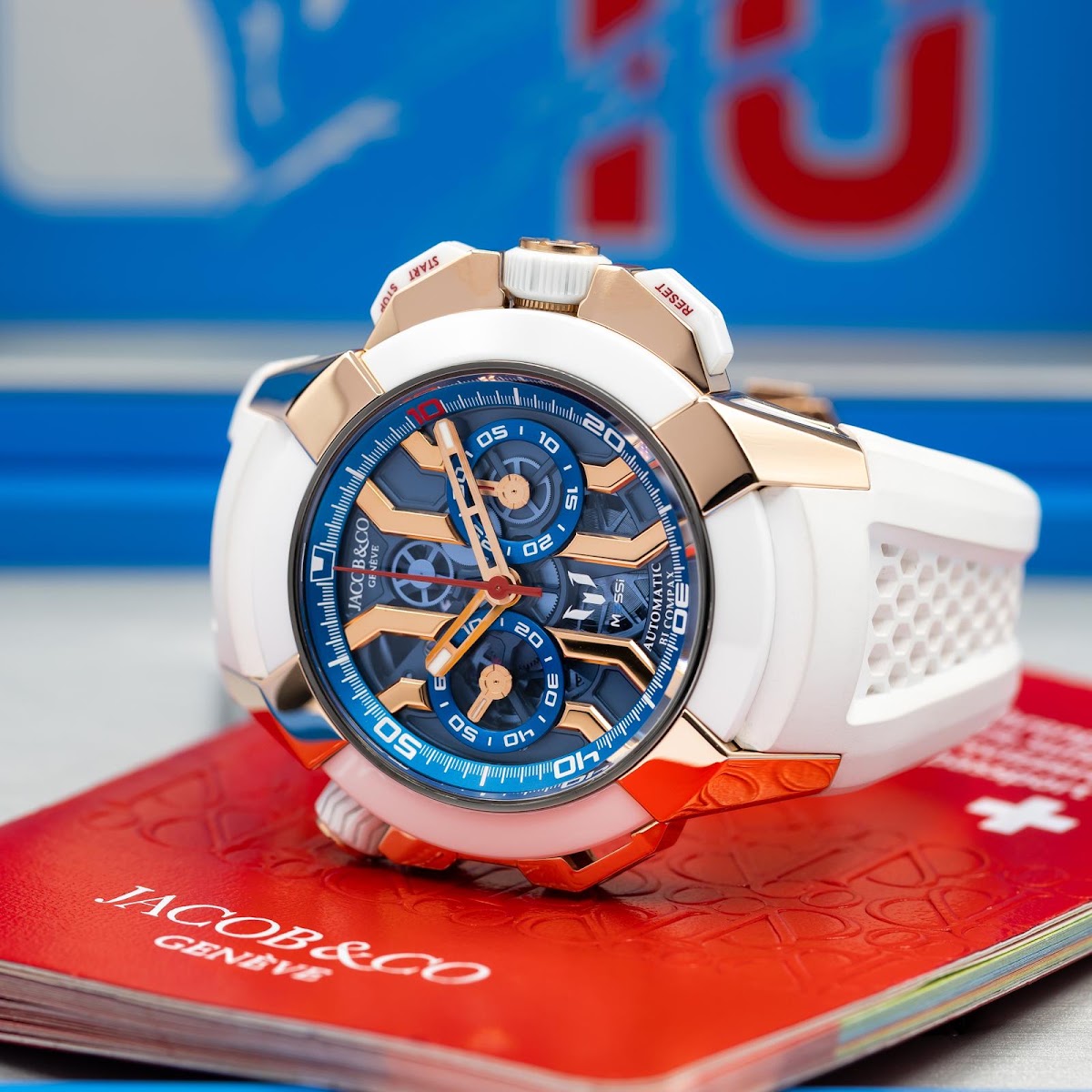
Watch Grande
Palm Beach Lakes, Palm Beach, FL
exotic & classic service in Palm Beach
European Watch Company
Back Bay, Boston, MA
Resource for high-end new, pre-owned & vintage watches, with trade-in & restoration services.

Watch Vault
Afton Oaks / River Oaks Area, Houston, TX
exotic & classic service in Houston